
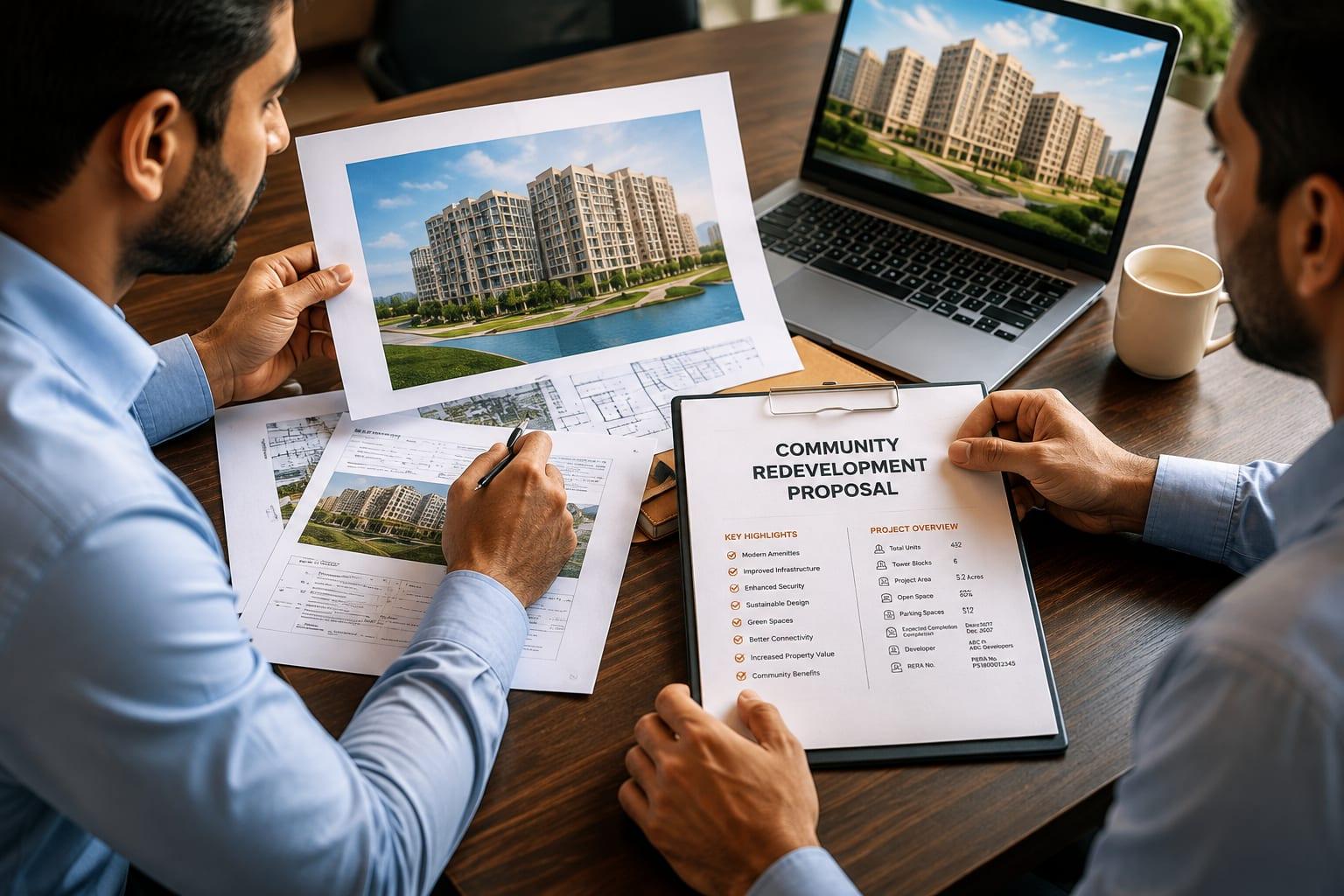
Most redevelopment disputes trace back to terms nobody read closely. Here are the questions worth asking while you still have leverage.
Redevelopment can be genuinely transformative for an ageing society — a new building, a larger flat, a corpus. It can also go badly, and when it does, the damage lands on families who cannot easily absorb it.
The difference is almost always decided before anyone signs.
Ask about the developer's record first
Not their brochure. Their record. Specifically:
- How many redevelopment projects have they completed, not started?
- Did members get possession on the date in the agreement?
- Was the rent paid on time, every month, for the full period?
- Can you speak to members of a society they have already delivered?
That last one is the most useful question in this article. Go and ask them.
Understand what you are actually being promised
Three numbers matter:
The area. Get clarity on carpet area, stated unambiguously, in writing. Understand exactly what "additional area" means and whether it is guaranteed or subject to approvals that may not come.
The corpus. When is it paid — on vacating, on possession, or in tranches? What happens to it if the project is delayed?
The rent. How much, for how long, paid on what date, and — critically — what is the remedy if it stops? A rent promise with no security behind it is a sentence in a document.
Read the development agreement properly
This is the document that governs everything. Engage a solicitor who works on redevelopment specifically, and have them explain the delay clauses, the termination rights, and what security exists behind the rent and corpus commitments.
The developer's lawyer drafted it to protect the developer. That is their job. You need someone doing the same job for you.
Get genuine consensus before, not after
The single biggest cause of stalled redevelopment is a society that was not actually aligned. A narrow majority pushed through over sustained objection tends to produce litigation, and litigation stops the project — often for years, with everyone already out of their homes.
Do the slow work of bringing members along. It is faster than the alternative.
Where we fit
We help societies evaluate developers, understand terms in plain language, and reach a decision members can actually live with. We are not incentivised to push you toward any particular developer, and we will tell you if we think a proposal is bad for you.
If your society is considering redevelopment, talk to us early — while you still have leverage. Once the agreement is signed, most of the useful advice is already too late.